

Many consumers' concerns about stainless steel cookware center on "food sticking" and "uneven heating." The emergence of Triple-Layer Clad technology is precisely aimed at solving these two pain points.
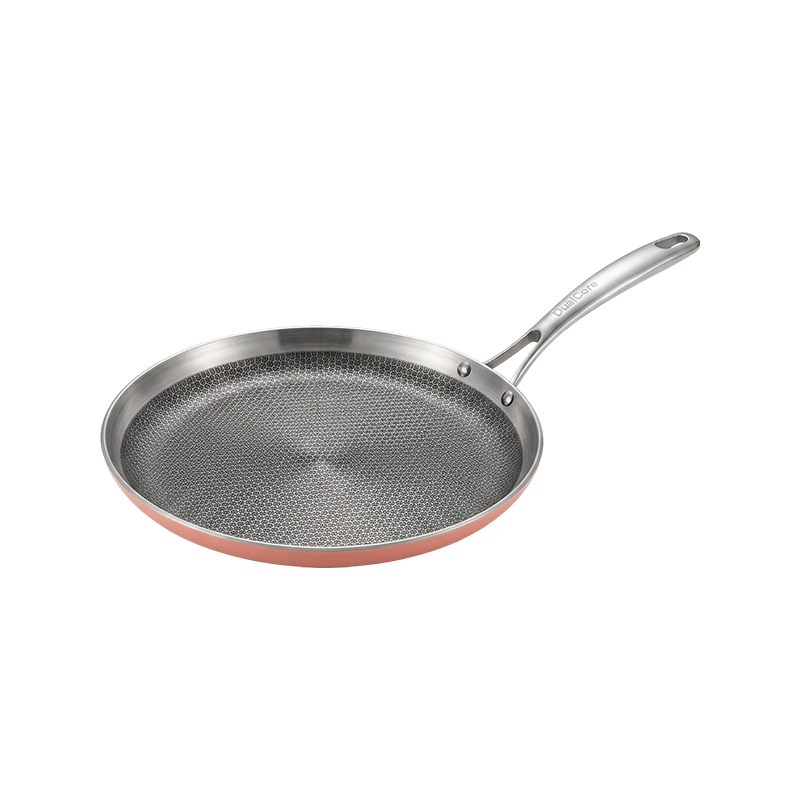
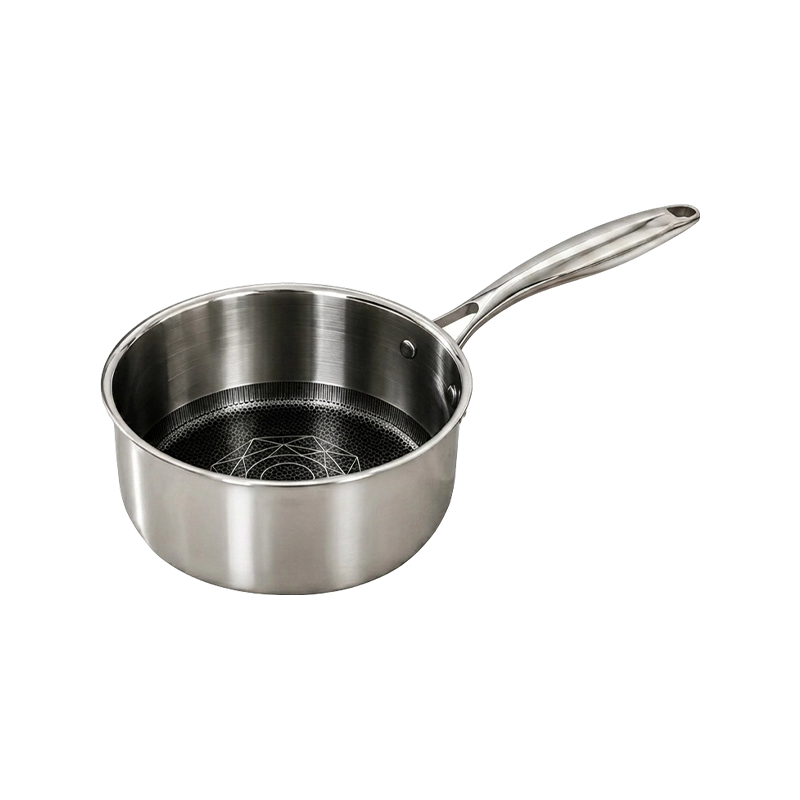
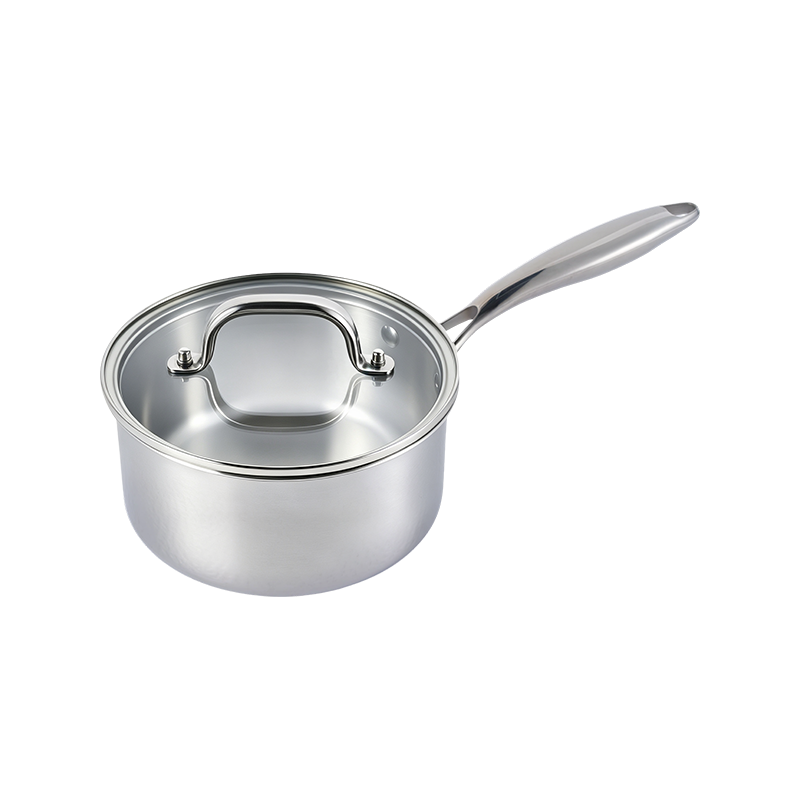
The core structure of Triple-Clad Steel consists of: an inner layer of food-grade stainless steel (in contact with food), a middle layer of highly conductive aluminum or aluminum-iron alloy, and an outer layer of magnetic stainless steel (compatible with induction cooktops). This structural design endows the cookware with the corrosion resistance of stainless steel, the rapid and uniform heat conduction of aluminum, and the strength and induction compatibility of steel.
From a physics perspective, the improvement in heat distribution uniformity comes from the high thermal conductivity of the middle aluminum layer. Aluminum's thermal conductivity is more than ten times that of stainless steel, allowing the middle layer to quickly transfer heat from the base to the sidewalls, resulting in a more uniform temperature distribution across the entire pan. This directly reduces the localized overheating that causes "sticking," achieving what is known as "physical non-stick" —good non-stick performance without the need for chemical coatings.
The energy-saving advantages of triple-layer steel cookware are equally noteworthy. Special curved grooves on the outer stainless steel layer guide flames to rise along the pan's exterior in a spiral pattern, extending flame contact time and improving gas utilization efficiency. Additionally, triple-layer steel cookware is compatible with all cooktop types, including induction, gas, and ceramic stovetops.
In practice, using triple-layer steel cookware requires attention to cooking technique: "hot pan, cold oil" is an effective method for reducing sticking. When the pan is preheated to the point where water droplets roll like beads, adding oil and ingredients will prevent food from adhering. For daily cleaning, avoid using steel wool or other abrasive materials that could damage the surface protective layer.


Home / News / Industry News / Analysis of Three-Layer Composite Steel Technology: Achieving "Physical Non-Stick" Properties and Uniform Heat Conduction
Industry News
Analysis of Three-Layer Composite Steel Technology: Achieving "Physical Non-Stick" Properties and Uniform Heat Conduction
Hot Products
Stay in Touch
Wherever you are, TriCore is ready to serve.
Company Details
24/7 Support Center:
(+86) 13085677677
Email: ideat@tricorecooker.com
Address: Factory Building No. 10, No. 529 Cangling Road, Huzhen Town, Jinyun County, Lishui, Zhejiang, China
Get direction
Copyright © Zhejiang IDEAT Houseware Products Co., Ltd. All rights reserved.
